

Cognitive-Behavioral Therapy (CBT)
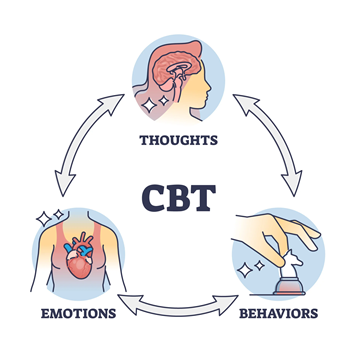
Cognitive-Behavioral Therapy (CBT) is a structured form of psychotherapy based on the scientifically supported idea that our thoughts, emotions, and behaviors interact with one another. During therapy, the therapist collaborates with the client to identify and modify negative patterns of thinking and behavior. Emphasis is placed on the “here and now” and on the formulation of specific short-term goals, whose progress is continuously monitored. Research indicates that CBT is effective across a wide range of psychological difficulties.
Applications of CBT
• Depression and various anxiety disorders (e.g., panic attacks, phobias).
• Obsessive-Compulsive Disorder (OCD) and Post-Traumatic Stress Disorder (PTSD).
• Eating disorders (anorexia nervosa, bulimia).
• Substance-related or behavioral addictions (e.g., gambling).
• Relationship difficulties and everyday adjustment problems, such as interpersonal conflict, work-related stress, or grief.
Benefits of CBT
• Short-term and goal-oriented: It is usually completed within a limited number of sessions.
• Structured, practical approach: Each session has a clear purpose; therapy includes specific techniques and goals.
• Scientifically validated: Numerous studies show that CBT is equally or even more effective than other therapies or pharmacological treatment.
• Skills training: Clients learn practical techniques for managing thoughts and emotions and apply these techniques through homework assignments.
• Improved problem management: Clients acquire new coping mechanisms and more realistic patterns of thinking.
How It Is Applied
• Individual or group sessions: Depending on individual needs, therapy is conducted either one-on-one or in small groups.
• Therapist–client collaboration: The therapist guides the client in identifying dysfunctional thoughts and behaviors and restructuring them.
• Goal setting: Specific short-term goals and coping strategies are jointly established.
• Homework assignments: Exercises (e.g., thought